Spectral Band Attention Networks: Efficient Multi-Feature Fusion
Published:



📄 Abstract & Problem Statement
Rapid, nondestructive seed variety identification is critical for agricultural efficiency. While Hyperspectral Imaging (HSI) offers rich spectral data (900-1700 nm), it suffers from the “curse of dimensionality”—redundant bands lead to overfitting, while low spatial resolution makes separating individual seeds difficult.
This research addresses these challenges by proposing a Spectral Band Attention Network (SBAN) to intelligently select informative bands and a multi-modal pipeline to fuse spectral and spatial features.
🔬 Methodology: Attention & Fusion
The proposed architecture integrates feature extraction and dimensionality reduction into a unified pipeline:
1. Spectral Band Attention Network (SBAN)
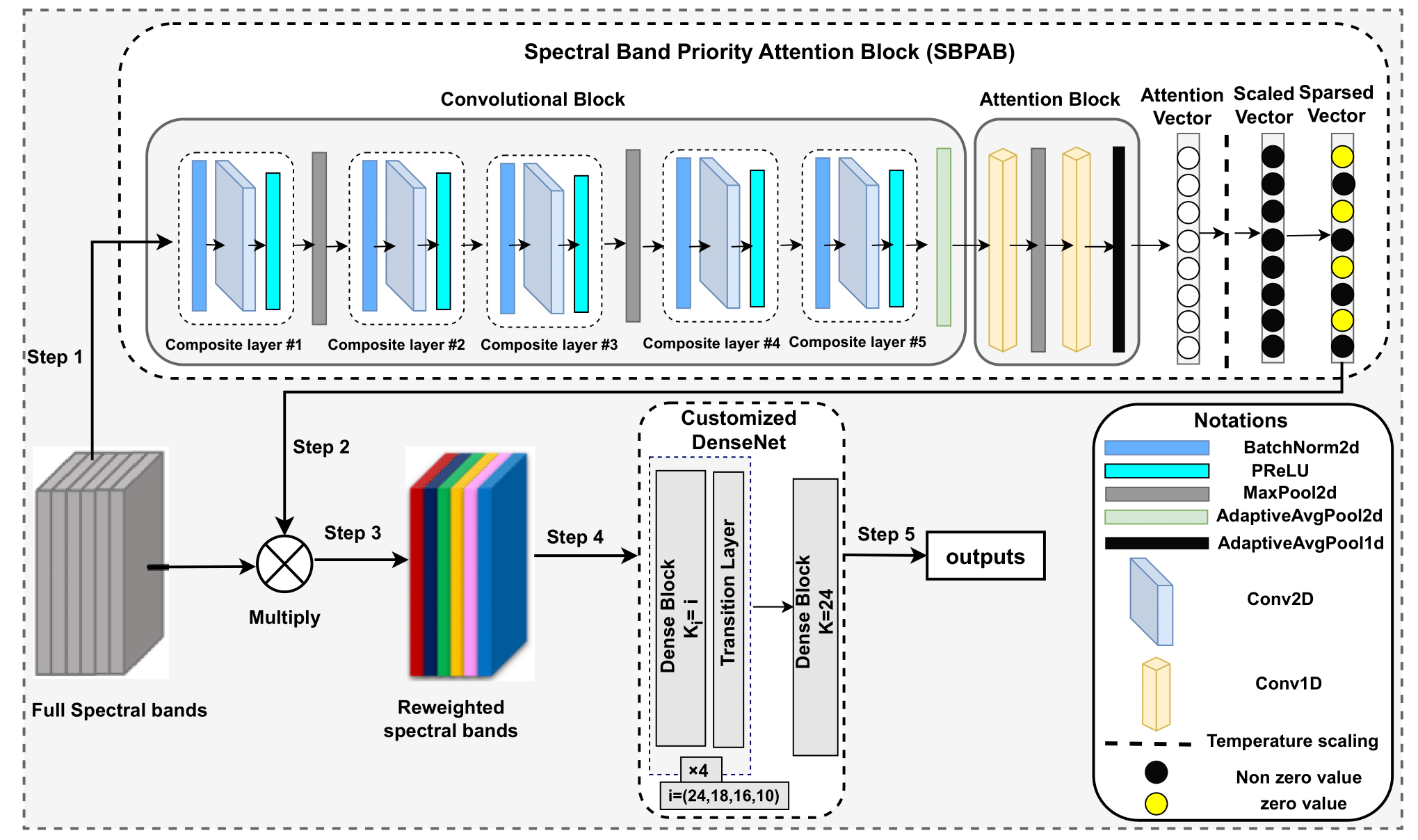
To overcome high dimensionality, a novel attention mechanism was developed that:
- Ranks Channels: Dynamically calculates the importance weight of each spectral band.
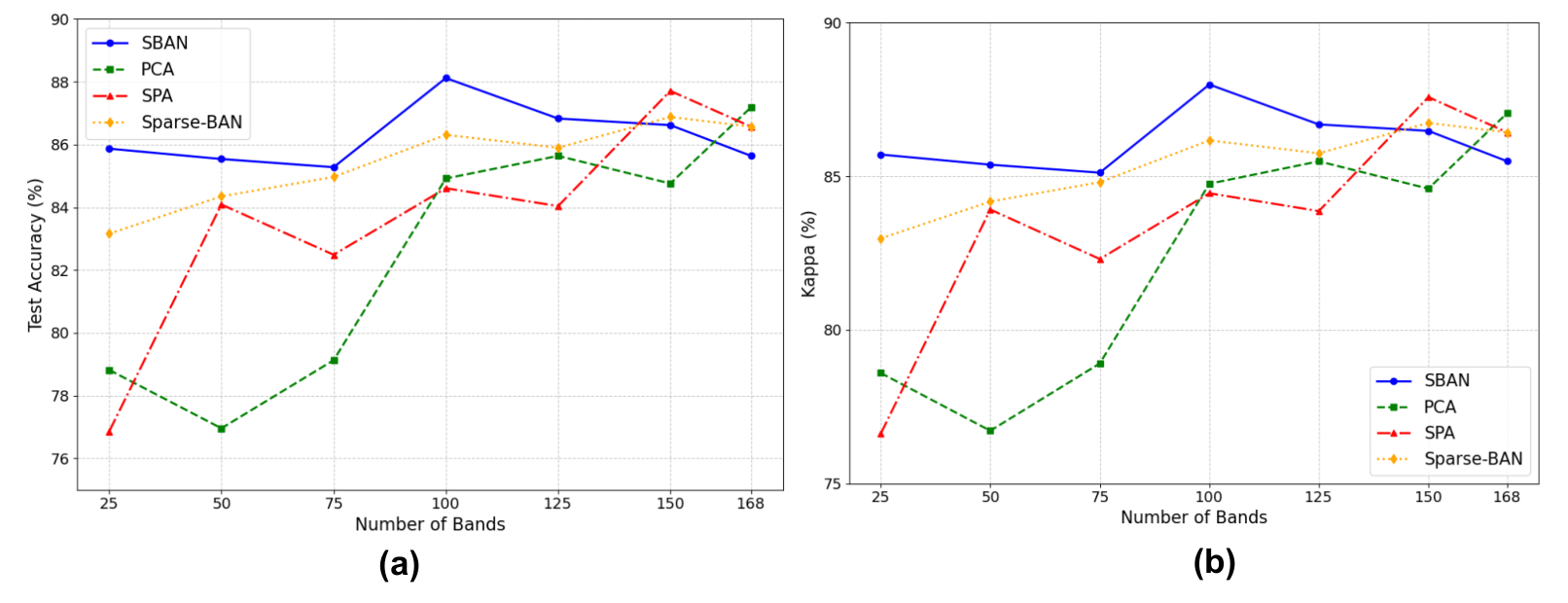
- Filters Redundancy: Identified 25 optimal bands out of the full spectrum, discarding noise while retaining discriminative features.
- Outperforms Baselines: Demonstrated superior selection compared to Sparse Band Attention, PCA-loading, and Triplet-attention methods.
2. Multi-Modal Ensemble Framework
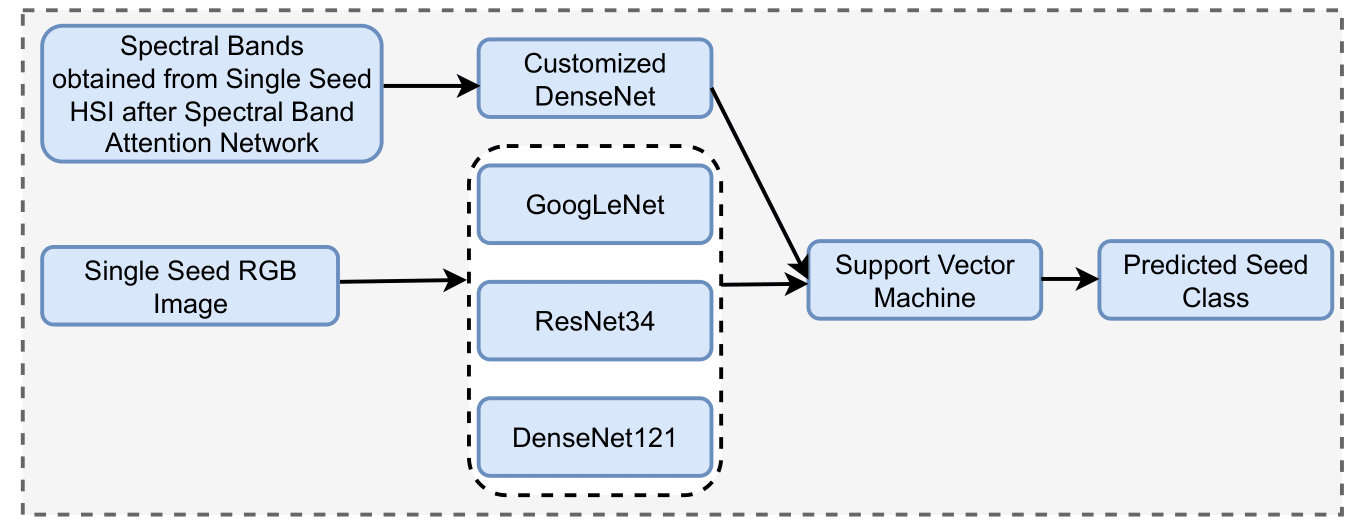
To leverage both spatial (RGB) and spectral (HSI) details, a stacked ensemble model was constructed:
- Backbones: Utilized four deep CNNs—Customized DenseNet, GoogLeNet, ResNet34, and DenseNet121.
- Fusion Strategy: Extracted features from both modalities are concatenated and passed to a Support Vector Machine (SVM) classifier for the final prediction.
📊 Results
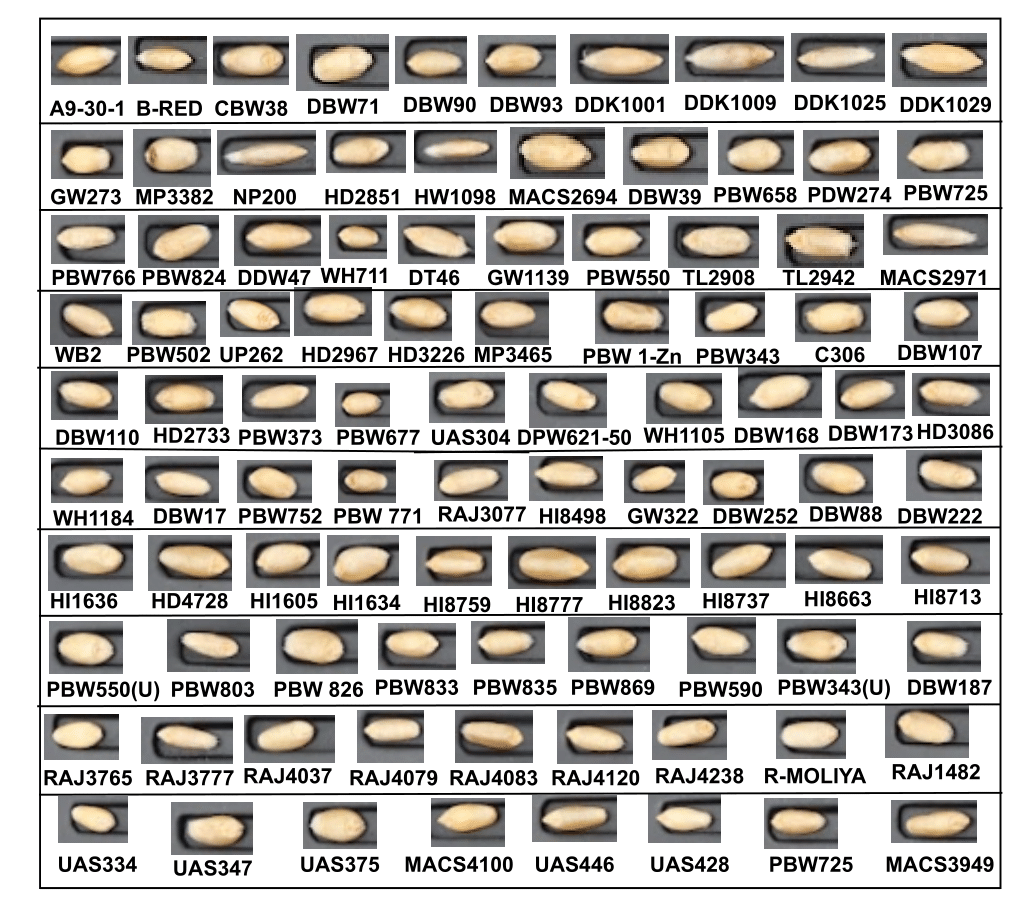
Tested on a massive custom dataset of 96 Indian wheat varieties:
- Accuracy: Achieved 95.75% test accuracy using the Ensemble + SBAN approach.
- Efficiency: Maintained high performance using only 25 selected bands, significantly reducing computational overhead compared to full-spectrum analysis.
🔗 Links
📸 Visual Library
Network architecture, spectral band selection heatmaps, and confusion matrices for 96-class classification.